As an Amazon Associate I earn from qualifying purchases.
Updated November 2026
Learning how to style combat boots comes down to three decisions: how the boot’s height and bulk balance your outfit, how your pants or skirt meet the boot, and how you finish the look with socks, layers and details. This guide walks through each decision in order so you can build outfits that look intentional, whether you are wearing lace-up boots to the office, out for the weekend or on a winter errand. By the end you will know which pant hems work, how to adjust for different boot heights, and what to avoid.
Start With the Boot’s Silhouette
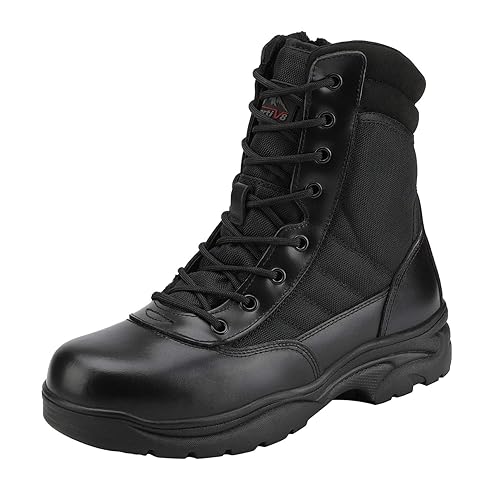
Before you think about outfits, look at the boot itself. Combat boots come in several profiles, and each one pushes the rest of your look in a different direction.
Shopping for one? See our guide: 6 Best Fashion Combat Boots for Everyday Style (2026).
- Ankle height (roughly 6 to 8 inches of shaft): The most versatile option. It sits just above the ankle bone and works with cropped pants, midi skirts and slim jeans.
- Mid-calf height (roughly 9 to 11 inches): Adds visual length to the leg and suits wide-leg trousers, cargo pants and dresses with tights.
- Tall height (12 inches and up): Makes a strong statement. Pair with shorter hemlines or slim pants tucked in, and keep the rest of the outfit streamlined.
Also check the toe shape and sole. A chunky lug sole adds visual weight, so balance it with fuller fabrics on top. A smoother, lower-profile sole looks sleeker and fits more easily under tailored pieces.
Step 1: Choose the Right Pant Hem
The hem is where most combat boot outfits succeed or fail. Because the boot is solid and visible, how your pant leg falls at the top of the shaft matters more than almost anything else.
- Measure the shaft. Stand in the boots and note where the top of the shaft hits your leg. Most people find it lands between the mid-calf and just below the knee.
- Decide between tucked and over. Slim or skinny pants can be tucked into the boot for a utilitarian look. Wider legs should sit over the boot, falling about half an inch to an inch below the shaft.
- Avoid the awkward middle. A pant leg that stops right at the shaft’s top edge often looks accidental. Either go clearly over the boot or clearly into it.
- Consider cropped pants. A hem that ends at the ankle works well with ankle boots and shows off the boot’s silhouette without covering it.
Pant Styles That Work Well
| Pant or skirt style | Best boot height | How to wear it |
|---|---|---|
| Straight-leg jeans | Ankle or mid-calf | Over the boot, with a slight break |
| Skinny jeans or leggings | Mid-calf or tall | Tucked in, or over the top of an ankle boot |
| Wide-leg trousers | Ankle or mid-calf | Over the boot, hem grazing the sole |
| Cargo pants | Any height | Over the boot for a relaxed, workwear feel |
| Midi skirt | Mid-calf or tall | Let the skirt fall over the shaft |
| Mini skirt or shorts | Tall | Pair with tights or socks that reach the boot top |
Step 2: Build the Rest of the Outfit Around the Boot
Combat boots are heavy visually, so the rest of your outfit should either echo that weight or contrast with it on purpose. A few reliable approaches:
- Keep it tonal. Black boots with black or charcoal pieces create a clean, graphic line.
- Add one soft layer. A knit sweater, oversized shirt or slip dress softens the boots’ toughness.
- Repeat a color. Pull a shade from the boot’s stitching, laces or hardware into a top, bag or scarf.
- Mix textures. Leather boots look good with denim, wool and cotton. Suede boots pair well with corduroy and knits.
Choosing Socks and Tights
What shows at the top of the shaft is part of the look. Thick crew socks read as casual and sporty. Sheer tights or knee-high socks in a contrasting color add a fashion-forward touch. If you want a clean line, wear socks that stay fully inside the boot. Choose a fabric that matches the season: cotton or merino for warmer weather, wool blends for cold days.
Step 3: Adjust for Season and Setting
The same boot can read very differently depending on the weather and where you are going. Think through the setting before you dress.
- Spring and fall: Pair ankle boots with lightweight trousers, a jacket and a knit layer. Leather and matte finishes suit this season well.
- Summer: Choose a lighter boot, such as a canvas or unlined leather style, with a dress, shorts or thin cotton pants. Ankle socks keep the look relaxed.
- Winter: Look for boots with insulation and a waterproof finish. Layer with a long coat and tuck a wool or fleece-lined pant leg into the shaft if the weather calls for it. Check the manufacturer’s stated temperature rating and waterproofing before relying on them in snow.
- Work settings: If you need a boot that meets a dress code, choose plain leather, simple laces and a smooth sole. Check any safety-toe or slip-resistance claim against the maker’s stated ASTM rating, since those labels are only as reliable as the manufacturer’s testing.
Step 4: Finish With Care and Details
Small details make combat boots look intentional rather than just worn. Clean scuffs before you go out, and keep leather conditioned so the finish stays even. Lace them snugly with the crossover pattern that suits your foot, and replace laces that have frayed. A boot that looks cared for almost always looks better than one with dusty, creased, mismatched details.
Checklist Before You Leave the House
- Pant hem is clearly over or clearly tucked, never stopping at the shaft’s edge
- Socks or tights are the right length and thickness for the season
- Boots are clean, laces are tight and not frayed
- Outfit has one soft or textured layer to balance the boot’s weight
- You can walk comfortably for the whole day in them
Common Mistakes
- Stopping the hem at the shaft. This creates a visual break that looks unfinished.
- Wearing bulky pants into tall boots. Wide, heavy fabric can swallow the boot and make your legs look shorter.
- Ignoring fit. Boots that pinch or slide will make any outfit look wrong. Break them in gradually before wearing them all day.
- Overloading the look. Heavy hardware, chunky knits and bold prints together can compete with the boot. Choose one focal point.
- Forgetting the weather. Suede and unsealed leather can stain or water-spot quickly. Match the boot’s material to the conditions.
Tips for Better Results
- Try boots on with the socks you plan to wear, and walk on a hard floor to check heel slip.
- Keep one pair of tall boots and one pair of ankle boots in rotation so you can test different hem lengths.
- Photograph outfits you like to build a quick reference for future combinations.
- If you need a boot that works for both fashion and long walks, look for a cushioned insole and a flexible sole.
Recommended gear
Good boot care and fit accessories make a visible difference in how combat boots look over time. These are the categories worth considering:
- Leather conditioner: Keeps smooth leather supple so it creases evenly rather than cracking. Apply a thin layer every few weeks, following the product’s directions. View on Amazon
- Boot brush: A stiff brush removes dirt and salt from welts and lug soles before they dry and stain. View on Amazon
- Replacement boot laces: Fresh laces in a complementary color can change the look of your boots quickly. Choose a length that matches your eyelet count. View on Amazon
- Cushioned insoles: Add comfort for all-day wear and can help a boot fit more snugly if your foot sits low in the shaft. View on Amazon
If you are still deciding which boot style fits your wardrobe, 7 Best Leather Fashion Boots for Everyday Style (2026) compares options that work across many outfits. For colder months, 7 Best Insulated Winter Boots for Snow and Cold Weather (2026) covers the features that matter most. Those looking for lace-up styles in particular may find 6 Best Lace-Up Fashion Boots for Women: Picks Compared (2026) useful, and 6 Best Ankle Fashion Boots for Everyday Wear (2026) is a good companion if you want a shorter silhouette. For keeping your boots in shape, 6 Best Boot Care Products: Picks for Leather, Suede and Work Boots lists the basics.
FAQ
Can you wear combat boots with dresses?
Yes. Mid-calf and tall combat boots work well with midi and knee-length dresses, especially in a slip, shirt or knit style. Keep the dress relatively simple so the boots remain the feature.
Should combat boots be tucked into jeans?
Slim or skinny jeans often look best tucked into mid-calf or tall boots. Wider jeans generally look better over the top of the boot, with a slight break at the shaft.
What socks should I wear with combat boots?
Choose socks that match the season and boot height. Crew socks suit casual looks, and fine-knit or sheer tights work for dressier outfits. Make sure the socks fit inside the boot without bunching at the toe or heel.
How do I keep the boots from looking too heavy?
Balance them with softer fabrics above the waist, such as knits or flowing shirts, and choose tonal colors. A slimmer pant leg also reduces visual bulk.
Are combat boots appropriate for the office?
It depends on your workplace dress code. Plain leather boots with a smooth sole, paired with tailored trousers or a skirt, are often accepted in relaxed offices. Check your employer’s policy before deciding.
How do I know if the boots fit correctly?
Your heel should stay put when you walk, your toes should have a little room without sliding, and the shaft should sit comfortably around your calf. Walk around the house for a while before wearing them all day. If you have foot pain or a condition that affects how you walk, consult a podiatrist or other qualified professional about fit.
Can I wear combat boots in snow?
Only if the boots are specifically rated for winter use and have a waterproof construction. Check the manufacturer’s stated waterproofing and temperature rating, and treat leather with a suitable protector before exposure to wet conditions.
Conclusion
Styling combat boots is mostly about proportion and intention. Pick the boot height that suits your outfit, get the pant hem right, and balance the boot’s weight with softer layers and considered details. Keep the boots clean and comfortable, and they will work across seasons and settings.