As an Amazon Associate I earn from qualifying purchases.
Updated November 2026
Wondering whether urgent care will give you a walking boot after a sprain or fracture? In many cases, yes. Urgent care clinics often provide a removable walking boot for suspected or confirmed foot and ankle injuries, especially when an X-ray rules out a displaced break. Whether you leave with one depends on your injury, the clinic’s stock, and what your provider recommends. This guide covers how that decision usually works and compares six walking boots that owners commonly buy for recovery. Selection focused on adjustable closures, air or padded support, sizing options, and the injury types each model is designed for.
Our top picks at a glance
- 1
 TOP CHOICEBest overallUnited Ortho USA14115 Short Air Cam Walker Fracture BootView on Amazon
- 2
 TOP CHOICEBest for ankle sprainsAir Walking Boot for Broken Foot, Injury, Sprained AnkleView on Amazon
- 3
 TOP CHOICEBest budget pickWalking Boot for Broken & Injured Foot, Sprained Ankle, FractureView on Amazon
- 4
 Best for adjustable supportMedibot Advanced Walking Boot for Ankle Injuries and FracturesView on Amazon
- 5
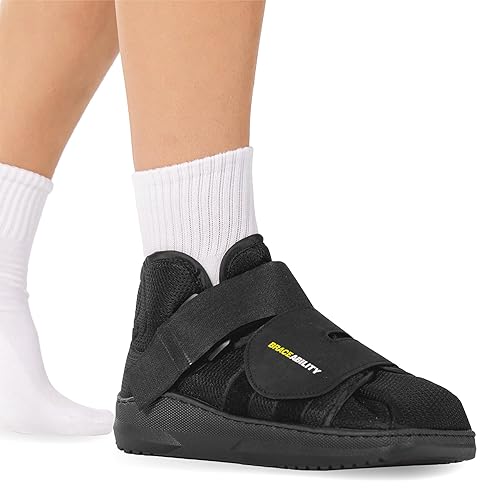 Best for toe injuriesBraceAbility Closed Toe Medical Walking ShoeView on Amazon
- 6
 Best for larger feetkefit Walking Boot Fracture Boot for Broken Foot, Sprained AnkleView on Amazon
Our Top Picks
| Product | Best for | Key feature |
|---|---|---|
| United Ortho USA14115 Short Air Cam Walker | Fractures and moderate injuries | Short cam-style boot with air cells |
| Air Walking Boot for Broken Foot | Sprained ankles | Inflatable air support |
| Walking Boot for Broken & Injured Foot | Budget-conscious buyers | Straightforward strap closure |
| Medibot Advanced Walking Boot | Adjustable compression | Built-in pump for air adjustment |
| BraceAbility Closed Toe Medical Walking Shoe | Toe and forefoot injuries | Closed-toe lightweight shell |
| kefit Walking Boot Fracture Boot | Larger feet | Large-size fit range |
United Ortho USA14115 Short Air Cam Walker Fracture Boot
United Ortho USA14115 Short Air Cam Walker Fracture Boot, Medium, Black
Best for: Fractures and moderate injuries that need firm immobilization
This short cam-style boot suits people whose provider wants the foot kept still while bones heal. It fits under pant legs more easily than longer models.
Key specs:
- Short cam-style walker design
- Air-cell cushioning
- Medium size, black
Pros:
- Firm, stable support
- Lower profile than long walkers
- Adjustable straps
Cons:
- Requires a sizing check
- Less cushioning when standing long
Bottom line: A strong fit for patients whose provider has ordered a short walker for a fracture.
Air Walking Boot for Broken Foot, Injury, Sprained Ankle
Air Walking Boot for Broken Foot, Injury, Sprained Ankle, M
Best for: Sprained ankles and soft-tissue injuries
Designed for people managing sprains or mild injuries who need compression and a removable option for sleeping and bathing.
Key specs:
- Inflatable air support
- Removable design
- Medium size
Pros:
- Adjustable compression
- Lightweight feel
- Easy to put on
Cons:
- Air cells can lose pressure over time
- Not suited to displaced fractures
Bottom line: A good match for sprains when your provider approves a removable air boot.
Walking Boot for Broken & Injured Foot, Sprained Ankle, Fracture
Walking Boot for Broken & Injured Foot, Sprained Ankle, Fracture, M
Best for: Budget-conscious buyers who need basic immobilization
A no-frills walker for people who want a simple strap-and-shell design for general foot and ankle recovery.
Key specs:
- Strap closure system
- Medium size
- Rigid outer shell
Pros:
- Simple to use
- Covers multiple injury types
- Easy to clean
Cons:
- Fewer fit adjustments
- Can feel bulky indoors
Bottom line: Practical for buyers who want a basic walker without extra features.
Medibot Advanced Walking Boot for Ankle Injuries and Fractures
Medibot Advanced Walking Boot for Ankle Injuries & Fractures Adjustable Air Splint with Pump, Medium Black, Fits Shoe Size 6-10'', Men and Women
Best for: Adjustable support that can be tuned through the day
This model suits people who want to change compression levels as swelling goes down, using the built-in pump.
Key specs:
- Adjustable air splint
- Built-in pump
- Medium black size
Pros:
- Adjustable compression
- Supports ankle and fracture use
- Pump for fine-tuning
Cons:
- Pump adds a step to setup
- Sizing may need careful checking
Bottom line: A good pick if you want to adjust fit as your swelling changes.
BraceAbility Closed Toe Medical Walking Shoe
BraceAbility Closed Toe Medical Walking Shoe – Lightweight Broken Toe Cast Boot, Fractured Foot Brace for Metatarsal Stress Fracture, Post-op Bunion, Hammertoe Surgery Recovery – For Men or Women (M)
Best for: Toe and forefoot injuries needing a closed, protective shoe
This closed-toe design shields toes that are bruised or broken and works for people who need a lighter alternative to a full walker.
Key specs:
- Closed-toe shoe design
- Lightweight construction
- Designed for toe and foot injuries
Pros:
- Protects injured toes
- Lighter than full walkers
- Shoe-like appearance
Cons:
- Less ankle support
- Not for full-length immobilization
Bottom line: Best for toe and forefoot injuries your provider has cleared for a shoe-style brace.
kefit Walking Boot Fracture Boot for Broken Foot, Sprained Ankle
kefit Walking Boot Fracture Boot for Broken Foot, Sprained Ankle-Large
Best for: Larger feet that need a roomier fit
Aimed at people with larger feet who struggle to find walkers that close comfortably over a wide forefoot.
Key specs:
- Large size option
- Fracture and sprain use
- Adjustable straps
Pros:
- Roomy for larger feet
- Adjustable closures
- Versatile use
Cons:
- Bulkier profile
- Heavier than compact walkers
Bottom line: A solid option for buyers who need a large size that still closes securely.
Buying Guide
Injury Type and Provider Approval
Urgent care staff usually decide on a boot based on an exam and sometimes an X-ray. Fractures often call for a more rigid walker, while sprains may only need a removable air brace. Always follow the instructions your provider gives you before choosing a boot yourself.
Good picks for this: United Ortho USA14115 Short Air Cam Walker, Air Walking Boot for Broken Foot
Sizing and Fit
Measure your foot and compare it to the manufacturer’s size chart. A boot that is too tight can irritate skin, and one that is too loose may not stabilize the joint. Wear the sock you plan to use with the boot when checking fit.
Good picks for this: kefit Walking Boot Fracture Boot, Walking Boot for Broken & Injured Foot
Adjustability and Compression
Swelling often changes over several days. Boots with adjustable straps or air cells let you change pressure without buying a new brace. Check that closures are easy to reach so you can adjust them without help.
Good picks for this: Medibot Advanced Walking Boot, Air Walking Boot for Broken Foot
Toe and Forefoot Coverage
If your injury involves the toes, a boot that leaves them exposed may not protect them enough. Closed-toe designs give more protection for bruised or broken toes, but they usually offer less ankle support.
Good picks for this: BraceAbility Closed Toe Medical Walking Shoe
Weight and Everyday Use
Walkers are heavier than ordinary shoes, and that can strain your hips and back over time. Lighter models feel easier on long walks, while bulkier ones give more immobilization. Think about how much you need to move during recovery.
Good picks for this: BraceAbility Closed Toe Medical Walking Shoe, United Ortho USA14115 Short Air Cam Walker
FAQ
Will urgent care always give me a walking boot?
No. Urgent care providers decide based on your exam and any imaging. Some injuries are treated with a simple wrap or splint instead. If you are not offered a boot, ask what the next steps are.
Can I buy a walking boot without a prescription?
Many walking boots are sold without a prescription, but your provider should confirm the right type for your injury. Using the wrong boot can slow healing.
How long will I need to wear a walking boot?
Duration depends on the injury and your provider’s plan. Follow-up visits usually determine when to step down to a shoe. Do not stop wearing the boot early without advice.
Should I see a doctor if the boot hurts?
Yes. Numbness, tingling, color change, or worsening pain are reasons to call your provider promptly. Consult a medical professional for any concerns about your recovery.
Conclusion
Urgent care often provides a walking boot for fractures and serious sprains, though the decision depends on your exam. For fractures, a rigid short walker such as the United Ortho model is a common fit. For sprains, a removable air boot is often suitable. Toe injuries may call for a closed-toe shoe, and larger feet need a roomier size. Always confirm the right type with your provider.
Sources
- Guidance on fractures, sprains and immobilization from orthopaedic surgeons
- Research and medical information on foot and ankle injuries (nih.gov)
- General injury and recovery safety information (cdc.gov)
Before you buy: helpful guides