As an Amazon Associate I earn from qualifying purchases.
Updated November 2026
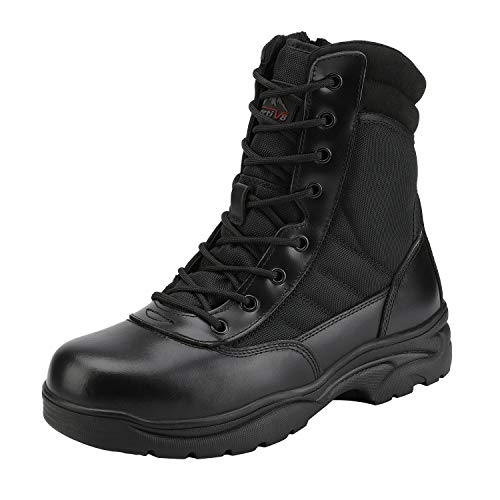
Combat boots and hiking boots look similar at a glance: both are lace-up, both have rugged soles, and both are built to take abuse. But they were designed for different jobs. Combat boots suit everyday wear, urban commutes, and work that calls for a sturdy, low-profile boot with a firm heel. Hiking boots suit walking on uneven ground, carrying a pack, and spending hours on trails where ankle support and traction matter more than a military silhouette. If you mostly stand, walk pavement, or need a boot for work, combat boots usually win. If you walk dirt, rock, or mud for long distances, hiking boots are the better choice.
| Criterion | Combat Boots | Hiking Boots |
|---|---|---|
| Typical construction | Leather or synthetic upper, rigid heel counter, lug or rubber outsole | Leather, synthetic, or hybrid upper, often with a membrane liner and molded midsole |
| Ankle support | Moderate, mainly from the boot shaft and lacing | Higher, with stiffer midsoles and often a supportive collar |
| Traction on loose terrain | Adequate on pavement and light dirt | Stronger, with deeper lugs designed for trail surfaces |
| Weight | Generally heavier per pair | Varies widely, with lightweight and heavy-duty options |
| Break-in time | Often stiff at first; several weeks of wear is common | Varies by model; many need a few trail outings |
| Waterproofing | Often treated leather, sometimes not waterproof | Frequently offered with a waterproof membrane |
| Everyday comfort | Good for long days on hard surfaces | Good for walking, but some models feel stiff in town |
| Best use | Work, urban wear, casual rugged style | Hiking, backpacking, outdoor recreation |
Fit and Sizing: Which Boot Is Easier to Get Right?
Both boot types need a proper fit, but hiking boots have more fit variables to manage. Hiking boots are often sized with extra room in the toe box so your foot does not hit the front on descents. Most fitters recommend trying them on in the afternoon, when feet have swelled slightly, and wearing the same thick socks you plan to hike in.
Combat boots are usually sized closer to your street shoe, but the stiff heel counter and narrower last on many models can make heel lift a problem. A useful check: lace the boot snugly, stand with your weight on both feet, and see whether your heel lifts more than a few millimeters when you rise onto your toes. Some heel slip is normal during break-in, but excessive lift leads to blisters.
Winner: Hiking boots for most people who need precise fit around the toe and heel for long walks, because manufacturers generally design them with more room and adjustable lacing options. Combat boots are easier to size for casual wear but harder to fine-tune for hours of walking.
Ankle Support and Stability: Which Boot Holds Your Foot Better?
Hiking boots generally offer more ankle support. Many have a higher collar, a torsionally stiffer midsole, and sometimes a shank that resists twisting on uneven ground. This matters when you carry a loaded pack or walk on rocks and roots. Manufacturers describe these features as designed to improve stability on trails.
Combat boots provide solid support for upright work and standing, thanks to their rigid heel counter and structured shaft. However, their soles are typically less flexible in the arch and less contoured for side-to-side stability on slopes. If you turn your ankle easily or carry heavy loads on uneven paths, a hiking boot is the safer pick. Anyone with an existing ankle or foot condition should consult a podiatrist or orthopedic professional before choosing a boot for sustained use.
Winner: Hiking boots for ankle stability on uneven ground. Combat boots are adequate for flat or semi-flat surfaces.
Traction and Outsole Design: Which Boot Grips Better?
Traction depends on the outsole compound, tread pattern, and lug depth. Hiking boots usually use rubber compounds formulated for grip on wet rock and dirt, with lugs spaced to shed mud and bite into soft ground. Some hiking outsoles are sticky enough for scrambling over granite.
Combat boots often have lug outsoles designed for durability and a firm footprint on pavement, gravel, and light dirt. Many have a rubber or polyurethane sole with a broad tread area. They perform well on dry concrete and mild terrain, but deep mud and wet slabs can challenge them.
If you need slip resistance on work surfaces, check whether the manufacturer lists a slip-resistance standard for that specific boot. Safety-toe and slip-resistance claims should be verified against the maker’s stated ASTM ratings, not assumed from the boot type.
Winner: Hiking boots for trail traction. Combat boots win for dry, flat, urban surfaces where a broad, durable sole is enough.
Weight and Comfort: Which Boot Feels Better for Long Days?
Combat boots are often heavier because of their thick leather uppers, reinforced toe caps, and heavy-duty soles. On a long day of standing or walking pavement, the extra weight adds fatigue. Many owners report that combat boots need a few weeks of break-in before they feel comfortable for all-day wear.
Hiking boots range from heavy full-leather models to light synthetic low-cut designs. A lightweight hiking boot can feel close to a running shoe in weight, while a traditional backpacking boot is noticeably heavier. For most readers, a mid-weight hiking boot gives a good balance of comfort and protection.
Winner: Hiking boots for overall comfort on trails and mixed terrain, especially lighter models. Combat boots can be comfortable on flat surfaces but tend to tire the legs over distance.
Break-In Time: Which Boot Is Ready Sooner?
Break-in is one of the biggest practical differences. Full-grain leather combat boots are often stiff out of the box and may take several weeks of regular wear to soften, particularly around the ankle collar and tongue. Owners commonly recommend wearing them for a few hours a day at first and wearing thick socks to help the leather mold.
Hiking boots vary by construction. Synthetic and lightweight hiking boots often feel comfortable immediately, while traditional leather hiking boots typically need several trail outings before they are fully broken in. Manufacturers usually advise short test walks before any long hike.
Winner: Hiking boots in the lightweight synthetic category, which are generally ready sooner. For full-leather boots of either type, expect a break-in period.
Waterproofing and Weather Performance: Which Boot Handles Wet Conditions Better?
Hiking boots are more likely to include a waterproof membrane, such as a laminated liner, and are often sold with a waterproof rating from the manufacturer. Leather hiking boots may also be treated with wax or waterproofing compounds. These features help in rain, stream crossings, and snow.
Combat boots are frequently made from leather that is water-resistant at best. Some are sold as waterproof or water-resistant, but many are not, and standing water or prolonged wet conditions can soak through. Regular conditioning and waterproofing treatment help, but do not replace a membrane built into the boot.
For winter, hiking boots with insulation and waterproofing are usually the better option, though insulated combat boots exist for cold work environments. Check the manufacturer’s stated waterproofing and insulation specifications before buying.
Winner: Hiking boots for wet and cold weather, particularly models with a stated waterproof membrane.
Style and Versatility: Which Boot Works Off the Trail?
Combat boots have a clear advantage in everyday style. Their rugged, minimal look pairs easily with jeans, work pants, and casual outfits. They are a common choice for people who want a boot that looks intentional in an urban setting.
Hiking boots are more athletic in design, with technical details, bulkier silhouettes, and colors chosen for function. Some lower-profile hiking boots look fine in town, but many are more obviously outdoor gear.
Winner: Combat boots for off-trail style and everyday versatility.
Which Should You Choose?
- Choose hiking boots if you walk trails, carry a pack, need ankle support on uneven ground, or want better waterproofing for wet weather.
- Choose combat boots if you mostly stand or walk on pavement, need a durable boot for work, or want a rugged look for daily wear.
- Choose hiking boots if you have a long walk planned and want better traction on mud, rock, and loose dirt.
- Choose combat boots if you prefer a classic lace-up style that works with casual and work clothes.
- Choose hiking boots if you want a lighter option that breaks in quickly, especially a synthetic or low-cut model.
- Choose combat boots if you need a boot for a job where a firm heel and rugged upper are required, and you have verified any safety-toe or slip-resistance ratings from the manufacturer.
Some readers will find that a single boot cannot cover every need. If you split your time between city work and weekend hikes, consider owning one of each rather than forcing one boot to handle both jobs.
Recommended Options
For a traditional combat boot, look at the Dr. Martens 1460 or the Danner Mountain Light if you want a rugged leather boot with a hiking-inspired build. For hiking, the Merrell Moab 3 Mid and the Salomon Quest 4 are widely recognized trail boots. Compare current specs and fit on the manufacturer’s site before buying.
Combat boot option: View on Amazon
Hiking boot option: View on Amazon
FAQ
Can I hike in combat boots?
You can hike short, flat trails in combat boots, but they are not designed for long distances, heavy packs, or steep, rocky terrain. Their stiffer soles and lower traction make them less suitable for sustained trail use. For anything beyond light walking, hiking boots are the safer choice.
Are hiking boots good for everyday wear?
Many people wear hiking boots daily, especially lighter models with flexible midsoles. Bulkier leather hiking boots can feel stiff on pavement and may look too technical for office or casual settings. Choose a lower-profile, lighter style if daily wear is your main goal.
Do combat boots need to be broken in?
Yes, many full-leather combat boots are stiff at first and benefit from several weeks of regular wear. Thick socks, short wearing sessions, and leather conditioner can speed up the process. Synthetic versions often feel comfortable sooner.
Are hiking boots waterproof?
Many hiking boots are sold with a waterproof membrane, but not all. Check the manufacturer’s specifications for a stated waterproof feature. Even waterproof boots are not fully protected from long immersion, so verify the claims and maintain the boot with appropriate treatments.
Which boot is better for work?
Combat boots are often chosen for work because of their durable uppers and firm heels. However, job requirements may call for specific safety features such as a safety toe or slip resistance. Confirm those features against the manufacturer’s stated ASTM ratings, and consult your employer or a safety professional if you are unsure what your job requires.
Conclusion
In the combat boots vs hiking boots comparison, hiking boots win on fit adjustability, ankle support, traction, weather performance, and comfort on long walks. Combat boots win on everyday style and suitability for urban work and pavement. Pick the boot that matches where you spend most of your time on your feet. If your life includes both trails and town, owning one of each is often the most practical answer.
Related reading
- 7 Best Winter Hiking Boots for Cold, Wet Trails: Picks Compared (2026)
- 6 Best Hiking Boot Accessories for Winter Trails and Wet Terrain
- 10 Best Hiking Boots for Every Trail and Season
- 10 Best Boot Socks for Work, Hiking and Winter: Picks Compared (2026)
- 10 Best Boot Laces Compared: Top Picks for Work, Hiking and Winter Boots (2026)