
As an Amazon Associate I earn from qualifying purchases.
Updated November 2026
Choosing from the best hiking boots comes down to a few practical questions: how far you walk, what the ground is like, how wet or cold it gets, and how much weight you carry. This list compares ten boots from the Amazon US catalog using the criteria a boot fitter would check first: fit and last shape, waterproofing method, outsole grip, ankle support, weight, and how long a pair typically needs to break in. We did not put these boots through our own field testing. Instead, the picks reflect manufacturer specifications, brand track record and patterns that owners tend to describe in their feedback.
Our top picks at a glance
- 1
 TOP CHOICEBest overallTimberland Men's White Ledge Mid Waterproof Hiking BootsView on Amazon
- 2
 TOP CHOICEBest for wet trailsMerrell Men's Moab 3 Mid Waterproof Hiking BootsView on Amazon
- 3
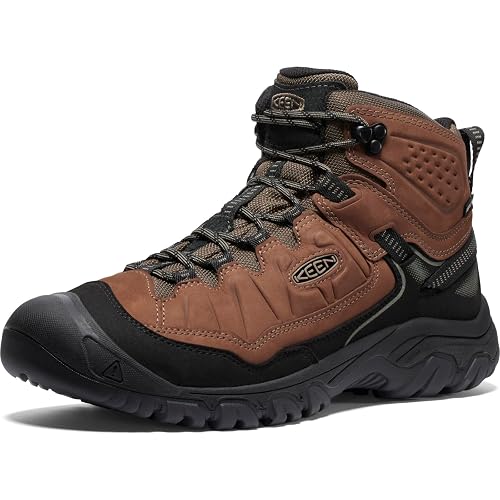 TOP CHOICEBest for wide feetKEEN Men's Targhee 4 Mid Height Waterproof Hiking BootsView on Amazon
- 4
 Best for cold weatherColumbia Men's Bugaboot III Snow BootView on Amazon
- 5
 Best for rocky terrainTimberland Men's Mt. Maddsen Hiking Waterproof BootsView on Amazon
- 6
 Best for light day hikesColumbia Men's Newton Ridge Plus II Waterproof Hiking BootsView on Amazon
- 7
 Best for ankle supportNORTIV 8 Men's Ankle High Waterproof Hiking BootsView on Amazon
- 8
 Best for all-day comfortColumbia Men's Crestwood Mid Waterproof Hiking BootsView on Amazon
- 9
 Best budget pickMen's Waterproof Hiking Boots Non-Slip Lightweight Mid Top Ankle BootView on Amazon
- 10
 Best casual-trail optionColumbia Men's Fairbanks Mid Hiking BootsView on Amazon
Our Top Picks
| Product | Best for | Key feature |
|---|---|---|
| Timberland Men’s White Ledge Mid Waterproof Hiking Boots | Overall day and multi-day hiking | Waterproof membrane with a mid-height cut |
| Merrell Men’s Moab 3 Mid Waterproof Hiking Boots | Wet trails and mixed terrain | Waterproof construction with a lugged outsole |
| KEEN Men’s Targhee 4 Mid Height Waterproof Hiking Boots | Wide feet and long trail days | Wide-fit options and a protective toe cap |
| Columbia Men’s Bugaboot III Snow Boot | Cold and snowy conditions | Insulated, waterproof snow boot design |
| Timberland Men’s Mt. Maddsen Hiking Waterproof Boots | Rocky and uneven ground | Supportive midsole and aggressive tread |
| Columbia Men’s Newton Ridge Plus II Waterproof Hiking Boots | Light day hikes | Lightweight build with waterproofing |
| NORTIV 8 Men’s Ankle High Waterproof Hiking Boots | Ankle support on uneven trails | High-cut collar for added ankle coverage |
| Columbia Men’s Crestwood Mid Waterproof Hiking Boots | Comfortable all-day wear | Cushioned footbed and waterproof upper |
| Men’s Waterproof Hiking Boots Non-Slip Lightweight Mid Top Ankle Boot Breathable Hiker Trekking Shoes | Budget-minded hikers | Breathable upper with non-slip outsole |
| Columbia Men’s Fairbanks Mid Hiking Boots | Casual trails and городской wear | Mid-height profile for everyday use |
Timberland Men’s White Ledge Mid Waterproof Hiking Boots
Timberland Men's White Ledge Mid Waterproof Hiking Boots
Best for: Overall day and multi-day hiking on mixed trails
This boot suits hikers who want one pair that handles dry trails, muddy stretches and light scrambling. The mid-height cut gives moderate ankle coverage without the stiffness of a full high-top.
Key specs
- Mid-height shaft
- Waterproof construction
- Lace-up closure
Pros
- Waterproof upper keeps feet dry in wet conditions
- Mid-height cut balances support and flexibility
- Owners often describe the fit as true to size for standard widths
Cons
- Break-in can take several outings on rough ground
- Heavier than trail-runner-style options
Bottom line: A strong first choice for hikers who want one reliable boot across varied terrain and seasons.
Merrell Men’s Moab 3 Mid Waterproof Hiking Boots
Merrell Men's Moab 3 Mid Waterproof Hiking Boots
Best for: Wet trails and mixed terrain
The Moab line is widely known in the hiking community for a comfortable, forgiving fit. It suits hikers who spend time on damp forest floors, stream crossings and muddy singletrack.
Key specs
- Mid-height shaft
- Waterproof upper
- Lugged rubber outsole
Pros
- Lugged outsole grips well on wet and loose surfaces
- Generally light for a waterproof mid-height boot
- Comfortable out of the box for many owners
Cons
- Narrow-fit feedback from some owners with wide feet
- Upper may feel warm in hot weather
Bottom line: A good pick for hikers who prioritize traction and comfort on wet, mixed trails.
KEEN Men’s Targhee 4 Mid Height Waterproof Hiking Boots
KEEN Men's Targhee 4 Mid Height Waterproof Hiking Boots
Best for: Wide feet and long trail days
KEEN is known for offering wider sizing and toe-protection features. This model suits hikers with broader forefeet who still want waterproofing and a stable platform.
Key specs
- Mid-height shaft
- Waterproof construction
- Protective toe cap
Pros
- Wide-fit availability suits broader feet
- Toe protection adds durability on rocky trails
- Owners often mention good out-of-box comfort
Cons
- Heavier than lightweight hiking shoes
- Toe box shape may feel roomy for narrow feet
Bottom line: The right choice for hikers who need room in the forefoot and want protective construction for longer days.
Columbia Men’s Bugaboot III Snow Boot
Columbia Men's Bugaboot III Snow Boot
Best for: Cold and snowy conditions
This is a snow boot rather than a summer trail boot. It fits hikers who face snow, slush and freezing temperatures on winter walks and cold-weather trips.
Key specs
- Waterproof construction
- Insulated for cold conditions
- Snow-boot styling
Pros
- Insulation suits sub-freezing walks
- Waterproof build handles slush and snow
- Warm-weather comfort is better than most snow boots
Cons
- Too warm and bulky for summer hiking
- Less flexible than standard trail boots
Bottom line: Pick this for winter hiking and cold-weather outings, not for three-season trail use.
Timberland Men’s Mt. Maddsen Hiking Waterproof Boots
Timberland Men's Mt. Maddsen Hiking Waterproof Boots
Best for: Rocky and uneven ground
The Mt. Maddsen suits hikers who cover rocky trails and need a supportive platform underfoot. It is aimed at people who value stability over minimal weight.
Key specs
- Waterproof construction
- Supportive midsole
- Aggressive tread pattern
Pros
- Supportive base helps on uneven terrain
- Tread pattern provides confident grip
- Waterproofing suits wet rocky ground
Cons
- Heavier than lightweight hiking options
- Stiffer feel may need extra break-in time
Bottom line: A solid pick for rocky trails where stability matters more than low weight.
Columbia Men’s Newton Ridge Plus II Waterproof Hiking Boots
Columbia Men's Newton Ridge Plus II Waterproof Hiking Boots
Best for: Light day hikes
This boot suits hikers who want waterproof protection without the weight of a heavy hiking boot. It works well for shorter trails and fair-weather day outings.
Key specs
- Waterproof construction
- Lightweight build
- Lace-up closure
Pros
- Lighter than many traditional waterproof hiking boots
- Waterproofing handles damp conditions
- Easy on-trail comfort for shorter hikes
Cons
- Less support for heavy loads or long distances
- Not ideal for technical terrain
Bottom line: Best for day hikers who want waterproofing with a lighter boot.
NORTIV 8 Men’s Ankle High Waterproof Hiking Boots
NORTIV 8 Men's Ankle High Waterproof Hiking Boots
Best for: Ankle support on uneven trails
A high-cut boot suits hikers who want more ankle coverage, particularly when carrying a pack or walking on loose ground. It is also a common choice for people who prefer extra structure around the ankle.
Key specs
- Ankle-high shaft
- Waterproof upper
- Lace-up closure
Pros
- High collar adds ankle coverage
- Waterproofing suits wet conditions
- Suitable for uneven, loose terrain
Cons
- Higher cut can feel restrictive for some hikers
- Requires careful sizing to avoid heel slip
Bottom line: Choose this if you want maximum ankle coverage and do not mind a higher-cut feel.
Columbia Men’s Crestwood Mid Waterproof Hiking Boots
Columbia Men's Crestwood Mid Waterproof Hiking Boots
Best for: Comfortable all-day wear
This boot suits hikers who spend long hours on their feet and want a cushioned, forgiving ride. It is a practical choice for travel days, walking tours and moderate trails.
Key specs
- Mid-height shaft
- Waterproof upper
- Cushioned footbed
Pros
- Cushioning suits long walking days
- Waterproof upper handles wet pavement and trails
- Mid-height cut feels casual and comfortable
Cons
- Less aggressive grip than dedicated mountain boots
- Not built for heavy pack loads
Bottom line: A comfortable all-rounder for walkers who want waterproofing without a technical feel.
Men’s Waterproof Hiking Boots Non-Slip Lightweight Mid Top Ankle Boot Breathable Hiker Trekking Shoes
Men's Waterproof Hiking Boots Non-Slip Lightweight Mid Top Ankle Boot Breathable Hiker Trekking Shoes
Best for: Budget-minded hikers
This is a value-oriented option for hikers who want waterproof, breathable footwear without a premium price focus. It suits casual trekkers and first-time buyers.
Key specs
- Mid-top ankle height
- Waterproof and breathable upper
- Non-slip outsole
Pros
- Breathable upper suits warmer weather
- Lightweight build for shorter trips
- Non-slip outsole aids traction on dry trails
Cons
- Less durable than premium leather boots over many seasons
- Sizing consistency varies by owner feedback
Bottom line: A sensible entry point for casual hikers testing the sport on a limited budget.
Columbia Men’s Fairbanks Mid Hiking Boots
Columbia Men's Fairbanks Mid Hiking Boots
Best for: Casual trails and everyday wear
This mid-height boot suits hikers who mostly walk well-maintained paths and want a boot that also works for errands and city walks.
Key specs
- Mid-height shaft
- Lace-up closure
- Casual trail styling
Pros
- Versatile look for trail and everyday use
- Mid-height cut offers moderate support
- Easy transition from trail to town
Cons
- Less waterproofing emphasis than dedicated waterproof models
- Not designed for technical or heavy-load hiking
Bottom line: Good for casual hikers who want one boot for both trail and street.
Buying Guide
Fit and sizing
Measure both feet in the afternoon, when they are slightly swollen. Hiking boots generally need about a thumb’s width (roughly 0.5 inch) of space between the longest toe and the front of the boot. Check heel lock by walking downhill; if your heel lifts more than slightly, try a narrower last or a different lacing technique.
Good picks for this: KEEN Men’s Targhee 4 Mid Height Waterproof Hiking Boots, Columbia Men’s Crestwood Mid Waterproof Hiking Boots
Waterproofing
Waterproof membranes keep water out, but they also trap heat and sweat inside. Choose waterproof boots for wet climates, stream crossings and snow. For hot, dry trails, a breathable non-waterproof boot may be more comfortable.
Good picks for this: Merrell Men’s Moab 3 Mid Waterproof Hiking Boots, Timberland Men’s White Ledge Mid Waterproof Hiking Boots
Ankle support and cut height
Mid-height boots offer moderate support and better flexibility. High-cut boots add ankle coverage, which many hikers prefer when carrying a heavy pack on loose ground. Match the cut height to your terrain and pack weight rather than choosing by appearance alone.
Good picks for this: NORTIV 8 Men’s Ankle High Waterproof Hiking Boots, Timberland Men’s Mt. Maddsen Hiking Waterproof Boots
Outsole and traction
Look for deep, multidirectional lugs for mud and loose dirt, and a firmer compound for rock. Manufacturers often describe their tread designs in terms of intended surface. Check whether the outsole is described for trail use or for pavement, since that changes grip performance considerably.
Good picks for this: Merrell Men’s Moab 3 Mid Waterproof Hiking Boots, Timberland Men’s Mt. Maddsen Hiking Waterproof Boots
Weight and load
Lighter boots reduce fatigue on day hikes, while heavier, stiffer boots support loaded backpacks on multi-day trips. As a general guide, consider a stiffer boot if you regularly carry more than about 20 pounds on rough ground. Lighter options suit shorter, fair-weather outings.
Good picks for this: Columbia Men’s Newton Ridge Plus II Waterproof Hiking Boots, Timberland Men’s White Ledge Mid Waterproof Hiking Boots
Break-in and comfort
Plan on several short walks before a long hike, especially with full-leather or stiffer boots. Wear the socks you intend to hike in. Blisters usually signal a fit or friction problem rather than a need to suffer through the break-in period.
Good picks for this: Columbia Men’s Crestwood Mid Waterproof Hiking Boots, Columbia Men’s Fairbanks Mid Hiking Boots
Cold-weather use
Insulated snow boots are much warmer than standard hiking boots but are heavier and less flexible. Choose insulation only when temperatures and conditions justify it, and consider layering socks rather than oversizing the boot.
Good picks for this: Columbia Men’s Bugaboot III Snow Boot, Timberland Men’s White Ledge Mid Waterproof Hiking Boots
FAQ
Do I need waterproof hiking boots?
Waterproof boots are a strong choice if you hike in rain, wet grass, stream crossings, or snow, because they keep your feet dry and comfortable. If you mostly hike on dry, warm trails, a breathable non-waterproof boot may feel cooler and dry out faster. Think about the conditions you face most often before deciding.
How should hiking boots fit?
Your heel should stay snug without slipping, and your toes should have a little room so they do not hit the front on descents. Try boots on in the afternoon, when feet are slightly swollen, and wear the socks you plan to hike in. A good fit should feel comfortable right away, with only minimal break-in needed.
How long do hiking boots take to break in?
Many boots need a few short walks or a couple of days of wear before they feel fully comfortable, while some lighter models need very little time. Stiffer leather boots generally take longer to soften than fabric and synthetic designs. Wearing them around the house and on short local walks first can help you avoid blisters on a longer trip.
Are mid-height boots better than ankle-high boots?
Mid-height boots add more ankle support, which can help on uneven terrain or when carrying a heavier pack. Lower-cut boots weigh less and allow more freedom of movement, which many day hikers prefer on well-maintained trails. The right height depends on your terrain, pack weight, and how stable your ankles feel.
What is the difference between hiking boots and trail shoes?
Hiking boots usually offer more ankle support, stiffer midsoles, and better protection for rough or rocky ground, especially when carrying weight. Trail shoes are lighter and more flexible, which suits fast hikes on smoother paths. Many hikers choose boots for backpacking and trail shoes for quick day outings.
How do I care for hiking boots so they last?
Brush off dirt and mud after each hike, and let boots air dry at room temperature rather than near a direct heat source, which can damage leather and glue. Reapply a water-repellent treatment suited to your boot material when water stops beading on the surface. Storing them in a cool, dry place and replacing worn insoles can extend their life.
Conclusion
For wet weather and rugged trails, a waterproof mid-height boot with strong ankle support is usually the most versatile choice, while lighter ankle-high models suit fast day hikes on drier ground. For cold, snowy conditions, an insulated winter boot is the better match. Matching the boot to your terrain, pack weight, and typical season will serve you better than choosing by brand alone.
Related reading
- 10 Best Boot Socks for Work, Hiking and Winter: Picks Compared (2026)
- 10 Best Boot Laces Compared: Top Picks for Work, Hiking and Winter Boots (2026)
- 6 Best Boot Care Products: Picks for Leather, Suede and Work Boots
- 6 Best Boot Care Gift Sets: Top Picks for Leather Boots (2026)
- 5 Best Boot Inserts for All-Day Comfort: Picks Compared (2026)
- 10 Best Leather Conditioners Compared: Top Picks for Boots and Bags

